3 French Friends who Democratized AI

"Democratizing good machine learning, one commit at a time."

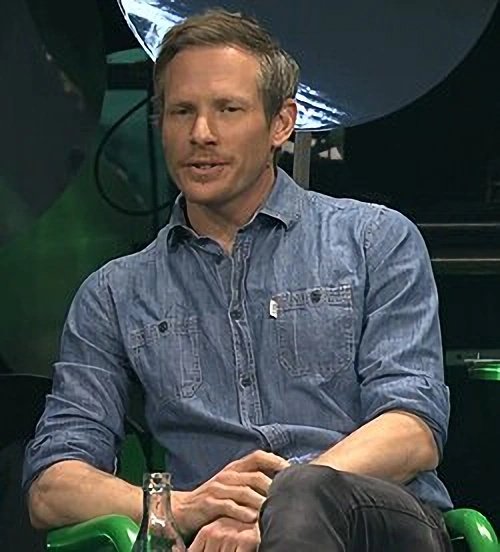
"empower 100 million AI builders to own their intelligence rather than rent it."
Spent any time looking at the tech world lately, you probably witnessed one of the most unexpected twists in modern tech history. Nvidia, the undisputed king of AI hardware, agreed to acquire a Brooklyn-based startup for a staggering $12.93 billion. The company’s name? Hugging Face, represented everywhere by a simple, friendly hugging face emoji (🤗).
At the center of this multi-billion dollar acquisition are three deeply nerdy, fiercely independent French entrepreneurs: Clément Delangue, Julien Chaumond, and Thomas Wolf. How did three guys who set out in 2016 to build a chatty chatbot for lonely teenagers end up building the literal "GitHub of AI"?
To understand the magic, we have to look closely at their backgrounds, their bizarre yet brilliant daily habits, and the shared vision that made them turn down the traditional path of corporate secrecy.
The Dream Team:
Different Dots, Same Pattern
Before they built an empire, the trio came from starkly different corners of academia and business.
🕐️ Clément "Clem" Delangue (The Hustler & CEO): Growing up in the small, quiet town of La Bassée in northern France, Clem was an entrepreneur from the jump. By age 17, he was one of France's top sellers on eBay, importing ATVs and dirt bikes from China. He went on to study at the prestigious ESCP Business School and later took computer science courses via Stanford’s open programs. Clem was always about product, community, and hustle.
🕞️ Julien Chaumond (The Elite Engineer): Julien brought the deep computer science heavy-lifting. He graduated from France’s elite École Polytechnique before earning a Master’s degree in Computer Science from Stanford University. He loved complex systems, scaling code, and infrastructure.
🕤️ Thomas Wolf (The Polymath Scientist): Thomas is what you call a renaissance man. Also an alumnus of École Polytechnique, he holds a PhD in quantum physics and, just for fun, worked as an intellectual property and patent lawyer. Oh, and he’s an avid musician who used to play in a band with Julien.
How They Gathered:
A Band, A Class, and Bored Teenagers
The story of how they came together feels remarkably organic. Julien and Clem were long-time friends who had crossed paths in the startup ecosystem. In 2015, while living in New York, Clem and Julien decided to take a specialized natural language processing (NLP) class.
To build what they wanted, they needed serious scientific depth. Julien knew exactly who to call: his old bandmate, the quantum-physicist-turned-patent-lawyer Thomas Wolf. By 2016, the three of them were operating out of a tiny tech incubator space in New York.
Their mission wasn’t to build developer tools. They wanted to create a fun, open-domain conversational AI friend for teenagers. Siri and Alexa existed, but Clem famously noted they were "extremely boring" and only handled productivity. Hugging Face was going to be a fun, empathetic chatbot.
The teenager app didn’t become a viral hit. But to make the chatbot work, Thomas, Julien, and Clem had built an incredibly robust set of underlying code libraries to process language. Almost as an afterthought, they decided to put that code on GitHub for free.
Boom. The AI research community went wild for it. Recognizing the organic pull, the founders made a terrifying pivot: they killed the consumer app and opened up their entire framework to the world.
Vision and Work Attitude:
Democratizing Machine Learning
The core ethos of Hugging Face is summarized in Clem's personal motto: "Democratizing good machine learning, one commit at a time."
While companies like OpenAI and Google kept their best models locked behind closed doors and paid APIs, Hugging Face believed in radical decentralization. Their work ethic wasn't about building a walled garden; it was about building a communal kitchen where anyone could share recipes.
Clem often emphasizes that AI shouldn't be owned by a few trillion-dollar tech monopolies. Their collective vision is to "empower 100 million AI builders to own their intelligence rather than rent it." This deep commitment to open-source software is what earned them the trust of millions of developers worldwide. Even when Nvidia bought them, the founders explicitly mandated that the platform must remain open, compute-agnostic, and independent.
Daily Habits:
Embracing the "Highly Improbable"
You don’t build a $13 billion company with a standard corporate routine. The founders are known for being down-to-earth, slightly eccentric, and "deeply nerdy."
Clem Delangue has shared a few of his core daily habits that shape how the company operates:
✔️ Walk the Crowded Streets: Clem avoids empty streets or isolated routines. He believes life's most impactful encounters—mentors, co-founders, or breakthrough ideas—happen by physically and digitally putting yourself in crowded spaces.
✔️ One Hour for the "Impossible": Every single day, Clem spends an hour working on things that "can't work." Because most people assume a radical idea is impossible, they don't try it. Clem likes to take an hour to prove the word "because" wrong.
✔️ Change the Routine: He intentionally breaks his daily habits to avoid a static status quo, forcing himself to constantly experiment.
This quirky, experimental culture trickles down to the code. When Nvidia acquired the company for $12,930,300,000, Thomas Wolf pointed out a hidden easter egg: the digits 12930 represent the exact hexadecimal Unicode point for the hugging face emoji (U+1F917) converted to a decimal value. Talk about matching corporate value with ultimate nerd humor!
Clément, Julien, and Thomas proved that you don't have to follow the traditional Silicon Valley playbook of secrecy and aggressive competition to win. By building a community first, keeping things fun, and trusting the power of open-source collaboration, they built the bedrock of the AI revolution.
As they move forward under the Nvidia umbrella, the three founders are staying on board, proving that they are still committed to the same simple dream they had in 2016: making AI accessible, open, and just a little bit more human.
Copyright 2026 All rights reserved