The “Restraint” Strategy on the Road to AGI 🤖🌟
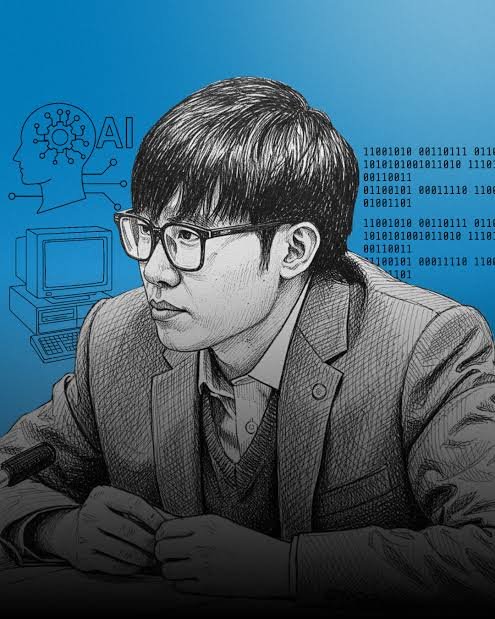
“Restraint is a strategy,”
“The more restrained you are, the more likely you are to succeed”
Hey, tech explorer! 👋 Ever wondered what goes on in the mind of someone building what might be the future of intelligence? Well, grab a coffee and settle in, because we’re about to peek behind the curtain of one of the most intriguing minds in AI right now.
Recently, a leaked transcript of DeepSeek founder Liang Wenfeng’s four-hour conversation with investors has been making waves . And let me tell you—it’s not your typical tech bro hype session. This is something refreshingly different. 😄
The “Just a Bunch of Ordinary People” Vibe 🧑🤝🧑
Here’s the thing about Liang—he doesn’t talk like a CEO trying to impress investors. He talks like someone who genuinely believes in what he’s building. The company’s origin story? “We are just a very ordinary group of people” who came together “with great goodwill toward the world” to do something useful for humanity .
No KPI obsession. No rigid organizational charts. Just a shared vision—and get this—they don’t even have it written down anywhere . It’s almost like they’re running on pure belief and the collective “let’s make something cool” energy. How refreshing is that? 😌
Liang also casually drops this gem: “We generally don’t work overtime.” Why? Because research needs a relaxed environment. “If you push too hard, you can’t do research” . Tell that to the 80-hour workweek culture elsewhere!
The “No” List: What DeepSeek Isn’t Doing 🚫
Here’s where things get really interesting. In an era where everyone’s scrambling to do everything, Liang’s strategy is all about saying no .
No 3D generation. No video generation. No world models. No chasing C-end users or B-end revenue like crazy. Liang even said outright: “We have no intention of becoming the next ByteDance or the next Tencent” .
Why? Because in his view, these are all “side quests.” The main quest is AGI—and everything else is just “sesame seeds” compared to the “watermelon” waiting ahead . 🍉
He put it bluntly: “Video generation is a good business, but it has nothing to do with the upper limits of intelligence” . For Liang, multi-modality is “just a component, not the main line of intelligence itself” .
The AGI Roadmap: Climbing the Stairs
So if they’re not doing all those trendy things, what are they doing? Liang has a crystal-clear roadmap:
Language Model → CoT (Chain of Thought) → Agent → Continuous Learning → Singularity → Embodied Intelligence
Last year’s step was solving Chain of Thought. This year? It’s all about Agent. And the next big mountain to climb? Continuous learning—the ability for AI to learn and adapt without needing the entire context fed to it every single time .
Liang pointed out a fascinating limitation of current AI: give it all the context, and it outperforms humans. But in the real world, you can’t give AI all the context all the time. You hire a human employee, they spend two months learning the environment, and then they just get it. AI doesn’t have that . That’s the gap he’s determined to close.
“The first goal of the models we build is not for everyone to use them well, but for us to use them well ourselves,” he said. “This is the fastest way to achieve AGI” . Meaning: build the thing that helps you build the next thing. Self-improving AI. Mind-blowing stuff. 🤯
The “Restraint” Philosophy: Why Less Is More 🧘
Here’s the most counterintuitive part of Liang’s strategy: he believes in restraint as a competitive advantage.
“Restraint is a strategy,” he said. “The more restrained you are, the more likely you are to succeed” .
In practice, this means:
- Open-source everything—even their strongest models. Why? Because AI will eventually account for 10% of global GDP, and anyone who tries to hoard that will be “abandoned by history” .
- “Reasonable profits” only—not profit maximization. When they dropped a model’s price to a quarter of its original, the team cheered .
- 10-month hardware cost recovery—not faster, not slower .
“We still want this to be useful to people, rather than making the most money,” Liang said . In an era of aggressive monetization, this is practically revolutionary.
On China vs. US AI: Honest About the Gap 🇨🇳🇺🇸
Liang doesn’t sugarcoat the situation. He acknowledges China is 12 to 18 months behind the US in AI, with about 1/20 of the computing power . But here’s where his optimism kicks in:
“The gap is only in resources, not talent” . He believes the talent is randomly distributed globally, and China has plenty of brilliant minds. His goal? Use superior efficiency to shrink that gap to just 3–6 months .
He’s also betting big on domestic chips. “NVIDIA’s CUDA ecosystem is being disrupted,” he argues. AI could help rewrite software for domestic chips, creating a “historic opportunity” for China’s AI chip ecosystem .
Perhaps Liang’s most powerful statement came when he said: “As long as we maintain team stability, I can definitely achieve AGI. It’s that simple” .
In a world obsessed with funding rounds, compute power, and user metrics, Liang Wenfeng is betting on something far more human: a dedicated team, a clear vision, and the courage to say “no” to everything that doesn’t matter.
Whether he’s right or not? Well, that’s for history to decide. But watching him try is going to be one heck of a ride! 🚀
Stay curious, my friend! And remember—sometimes the most powerful thing you can do is focus on what really matters. 😉✨
Copyright 2026 All rights reserved